

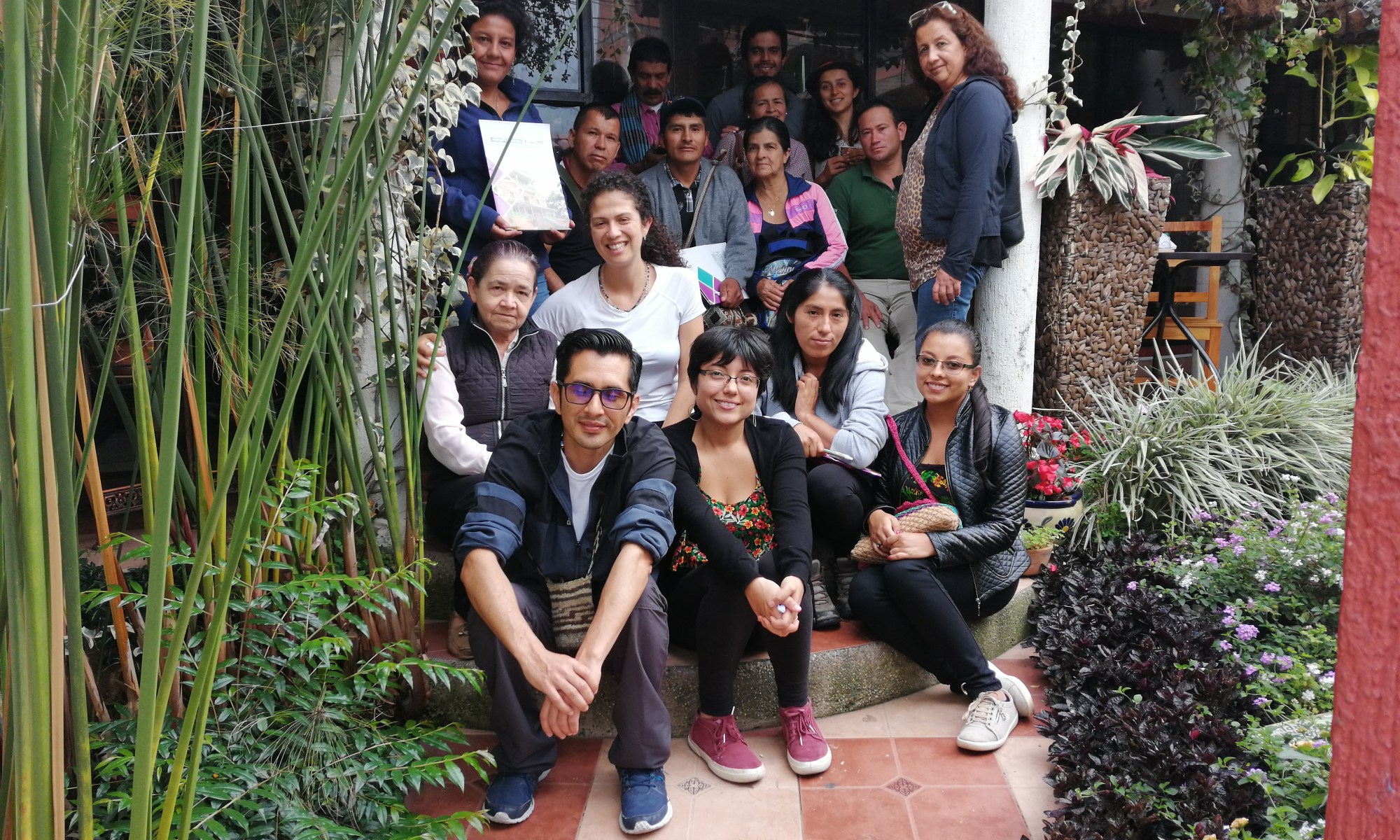
At 3 Colibrís, we advocate for the exchange of experiences to encourage dialogue and reflection on agroecological processes and transitions towards peace economies. Our goal is to identify best practices, lessons learned, challenges, and seek collaborative solutions.
We facilitated a working session on community innovation with the Coordinator of Integration of Peasant Economic Organizations (CIOEC), who visited us from Cochabamba, Bolivia. The purpose of the 5-day session was to strengthen the capacities, networks, and knowledge of CIOEC members in community innovation – that is, organizational models for food production and territory building. The aim was to design strategies based on solidarity and collaboration to address the daily challenges faced by the organization.

BINATIONAL DIALOGUE BETWEEN COMMUNITY ORGANIZATIONS: CIOEC COCHABAMBA AND TIERRA LIBRE.
In our interest to promote methodologies and tools that guide and/or help steer these innovation proposals, we advocate for the creation of new networks, capacities, and knowledge through collective processes and the exchange of situated experiences. Collective intelligence also requires emotional intelligence to listen, understand, reach agreements, and manage disagreements.
As part of the work session to promote community innovation facilitated by 3Colibrís, we included the creation of networks and knowledge exchange with an organization that shares challenges, knowledge, and significant experiences related to promoting the production/transformation/commercialization of locally sourced peasant-origin foods. This led to an encounter between two organizations with extensive experience, weaving the experiences of CIOEC with Tierra Libre in Fusagasugá, Cundinamarca.
CIOEC Cochabamba was established in 1991 and formally consolidated as a cooperative from the year 2000 onwards. Its objective is to contribute to the socio-economic and sustainable development of the country and its affiliated small-scale producers through the model of solidarity economy with self-management and food sovereignty.
In terms of production and marketing, CIOEC Cochabamba has a portfolio of 160 products, various collection centers, and a Participatory Guarantee System by the associates and consumers themselves. They also have a web platform managed by the organization Kampesino, which serves to showcase and market their products.
On the other hand, Tierra Libre is an organization that was born approximately fifteen years ago, where regional peasant associativity and political purpose have been woven to strengthen identities, build trust, and create alternatives for food sovereignty and staying in the territory. Currently, in the Sumapaz region, Tierra Libre is developing five Agroecological Peasant Schools and promoting the construction of a regional peasant and agro-environmental cooperative that articulates various peasant processes and families in Sumapaz.
Currently, Tierra Libre offers agricultural services, meeting spaces, and training, and since 2016, it has a novel commercialization proposal, the «La Huerta» Eco-store, a model of associative agroecological experiences in Cundinamarca and in Colombia.
The experience of «La Huerta» Eco-store, a result of the work and coordination of the Tierra Libre team, has faced peaks and falls of great learning in strengthening a strategy for marketing agroecological foods and processed products. External funding during its first year marked what was then considered a strength, and its termination defined it as both a challenge and an opportunity. These experiences have led to the strengthening of the cooperative’s self-management.»

Methodology for the Exchange of Experiences
Following this exchange of marketing experiences between CIOEC and Tierra Libre, a matrix was constructed to systematize best practices, tools, networks, infrastructure, decisions, customers, and the functioning of marketing. This later shed light on the obstacles and challenges yet to be addressed. The objective was not only to reflect on the general framework of marketing for each organization but also to think about the design of a marketing strategy.
The exchange of experiences began at Tierra Libre’s model farm in Pasca, Cundinamarca. We then moved to Fusagasugá to engage in conversations with farmers from the Sumapaz province linked to Tierra Libre, many of whom are suppliers for the LaHuerta Eco-store. We listened to CIOEC’s experience in transforming high-quality peasant-origin food products. Finally, in Tibacuy, we stayed at one of the local community tourism association’s coffee farms—a perfect setting for birdwatching, learning about coffee cultivation, and conducting our exchange of experiences in marketing.
Each organization reflected internally and shared its operations (networks, tools, types of customers, marketing strategies, marketing channels), as well as successes in commercial management and challenges. The other organization was then asked to share ideas from its experience to address these challenges. Through a cross-ideation exercise, CIOEC shared ideas that could help solve Tierra Libre’s main commercial challenges, and vice versa, with the interest of staying in touch to continue sharing experiences even from a distance.
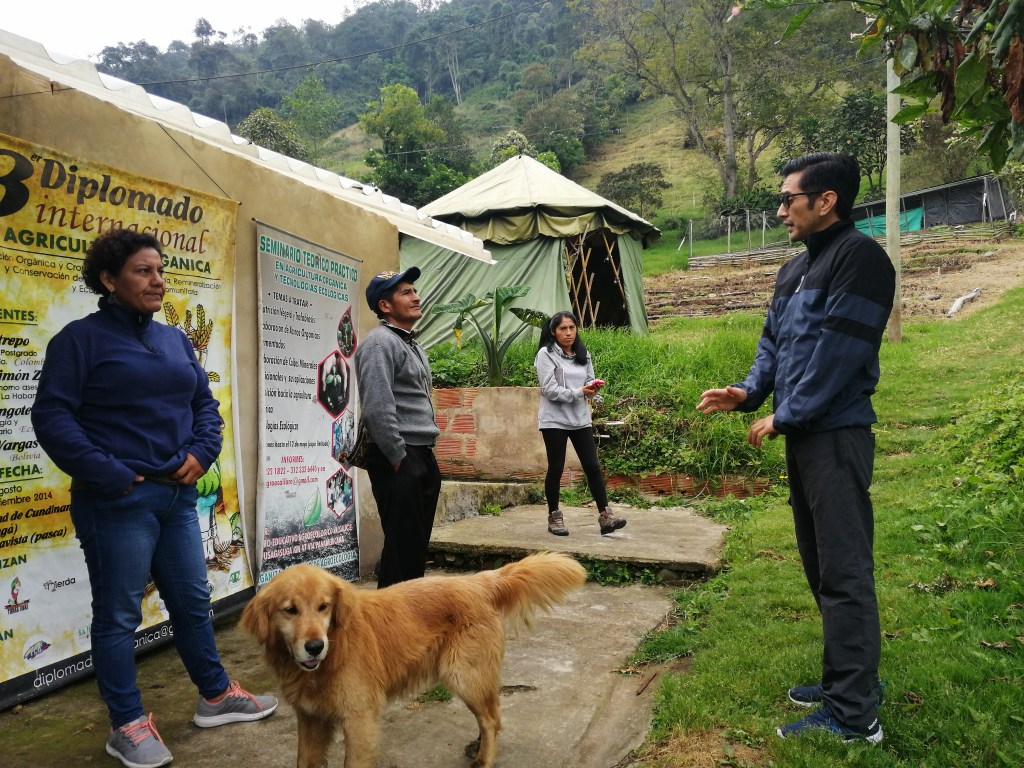
Collective ideation for the development of innovative solutions
The ideation exercise yielded tangible results that, in the medium and long term, have the potential to become innovative strategies to solve everyday problems faced by community organizations in relation to their commercial management. Below, we mention the strengths and practices identified as positive by the organizations, as well as some opportunities for improvement in their commercial management:
Strengths and positive practices in relation to commercial management:
- Collection centers.
- Website.
- Involvement in Participatory Guarantee Systems with corresponding quality criteria.
- Consolidation of an operational decision-making model that has enabled progress in pricing policy.
- Significant progress in creating consumer communities through awareness in both the productive and consumer sectors, aligned with the organization’s economic, socio-political, and ecological principles.

Opportunities for improvement in commercial management
- Divide and specialize roles within the organization.
- Redesign traceability processes of the supply based on current and potential consumption.
- Develop tools for collecting customer information to better understand consumer markets.
- Identify other potential markets to expand the cooperative’s product reach.
- Design a strategy to create meeting and organizing spaces with the consumer sector.

ADVANTAGES OF SHARING EXPERIENCES AMONG ORGANIZATIONS
- There is no absolute truth or single expert knowledge, so participants feel more comfortable expressing their impressions, concerns, weaknesses, and strengths.
- Through the creation of horizontal relationships, organizations easily build trust, allowing for open and fluid dialogues where the members of the organizations lead the protagonism of the proposed methodologies and activities, not the facilitators of the activity.
- The topics are of particular interest and utility to the participants in sharing experiences. While there was a predefined topic of interest—Short supply chains—it was the participating organizations that guided the thread of reflection based on their own experiences.
- Creation of networks and alliances with the potential to extend over time; participating organizations exchanged contacts to directly share opportunities, challenges, ideas, among other things, in the future.
- Having an external agent facilitate reflection exercises and create a kind of «radiograph» of the organization’s management in relation to a particular topic facilitates the identification of opportunities, weaknesses, threats, and strengths that exist in management—elements that are often difficult to identify in the organization’s day-to-day operations. It is always useful to take a break from the operational and everyday aspects to rethink the course organizations are taking and the opportunities for improvement that exist.

To conclude
In summary, the exercise of working collaboratively was of great utility to identify strengths, potentials, and challenges, as well as various ideas for implementation. Marketing often presents significant challenges to agroecological organizations, so dedicating efforts, resources, and energy to the development of a commercial strategy in grassroots organizations is far from an expense; it is an investment that defines sustainability in the long term for these collective processes that contribute to transforming how producers and consumers relate, reducing social and economic gaps to consolidate proximity relationships.

We thank CIOEC Cochabamba and Tierra Libre for providing us with the opportunity for this collective learning, for the encounter, and the bonds that have been formed.
 3colibrís