

By Ana Prada.
Nearly six months ago, a dear friend said, «You should apply for a scholarship for the International Training in Dialogue and Mediation from Uppsala University.»
«What’s the connection between rural development and dialogue and mediation?» I wondered.
So, I went home with this big question: Could conflict resolution contribute to rural development in Colombia, and does it have anything to do with peace economies? I spent several days pondering this question, letting it soak in, until one day, while visiting the Supatá hamlet in Boyacá for the first time with my colleague and 3colibrís columnist Angie Puentes, I had a moment of realization. Talking to members of the Community Action Board, we exchanged thoughts on how to encourage communities to participate in local community processes. It was there that I had an «Aha!» moment. Resolving conflicts through dialogue and inclusion in local rural development projects contributes to building peace.

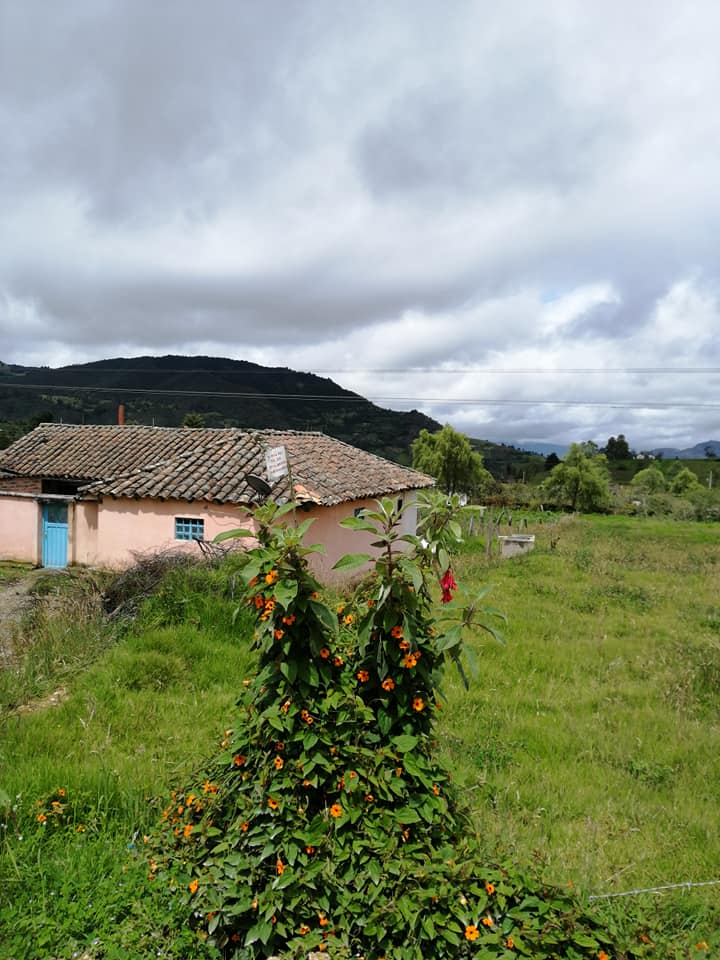
The Supatá community is fortunate to live in peace; they have not experienced the scourge of armed conflict in Colombia. The hamlet is a primarily rural, tranquil area. However, like any community, they face challenges: achieving their needs and desires in local and regional public policy settings, activating their local economies, strengthening their social fabric, developing inclusive economic models, and offering opportunities to the youth.
Supatá has a long-standing community process with inspiring local leadership, yet involving families in decision-making processes and local activities, especially in the lower part of the hamlet, where the population is more scattered and has limited access to transportation and telecommunications infrastructure, remains a challenge.
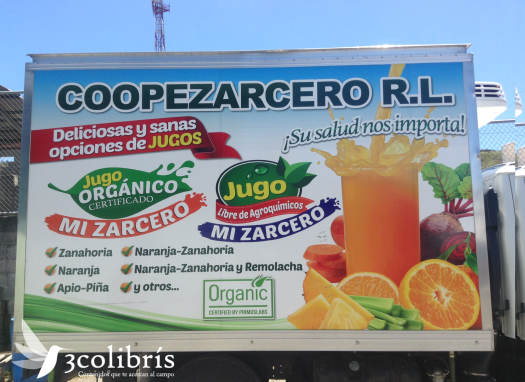
The social transformation processes that have inspired me the most, such as the Cooperative of Coffee Growers of Southern Cauca in Colombia, the Peasant Association of the Cimitarra River Valley in the Middle Magdalena region of Colombia, Femcafé in Veracruz, Mexico, and Coopezarcero in Zarcero, Costa Rica, all have something in common. They are grassroots, self-managed organizational processes that serve as platforms for their members to generate income, with a clear vision of a desirable future and an admirable ability to address differences and conflicts through consensus and dialogue.
So, I applied for the International Training in Dialogue and Mediation offered by the Faculty of Peace and Conflict Research at Uppsala University and the Dag Hammarskjöld Foundation, with the hypothesis that there is a relationship between dialogue, mediation, and the construction of economic models that support agriculture, small-scale farming, and community-based agriculture, to contribute to the consolidation of stable and lasting peace in Colombia. That was my proposal, and in May, I received the joyful news that my proposal had been selected to be shared with activists from around the world who are dedicated to sowing peace in conflict-affected contexts.

The Faculty of Peace and Conflict Research at Uppsala University was founded in 1971 in the Swedish city of Uppsala. It is one of the world’s largest research environments and has played a leading role in peace processes worldwide. Its professors, such as Peter Wallersteen, have participated as third parties in peace dialogues in Asia and Africa. Additionally, the faculty has created the most diverse and extensive conflict database in the world to track global conflicts, contributing to the development of policies favoring peace construction and urging the international community to support peace-building efforts instead of endorsing war discourses and policies through the Uppsala Conflict Data Program (UCDP).


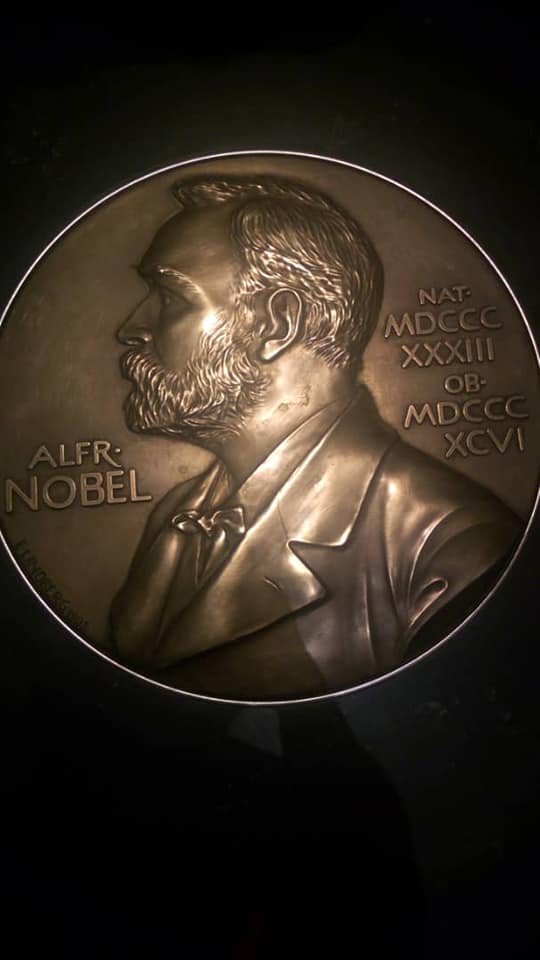
The International Training in Dialogue and Mediation lasts 10 days at the Uppsala university campus and has a practical orientation. It fosters dialogue with faculty professors, researchers from the Foundation, and organizations researching conflict prevention. We had two outings to Stockholm. The first focused on drawing inspiration from the history of Alfred Nobel, the creator of the Nobel Prize, who chose to dedicate his fortune to recognizing significant contributions in his preferred areas: Literature, Physics, Chemistry, Physiology or Medicine, Literature, Peace, and Economics. We specifically delved into the Nobel Peace Prizes, learning about the selection mechanisms and the stories of laureates.
Our second outing in Stockholm allowed us to explore two conflict prevention experiences. The first was at the Academia Folke Bernadotte (a Swedish governmental agency for peace, security, and development), which is dedicated to proposing solutions to prevent and resolve conflicts. Our second visit was to Fryhuset (an organization focused on working with young Swedes to prevent conflicts).
Additionally, in Uppsala, we had the honour of participating in a «Peace Walk» led by Professor Peter Wallersteen, where we had the opportunity to understand the factors that have contributed to Sweden’s 200-year history free from armed conflicts. These factors include inclusion in political, social, and economic life, choosing dialogue as a means of conflict resolution, and continuous collaboration between political actors, entrepreneurs, and civil society.
Diversity of worldviews was a central element during the training. We were 23 young people from 17 countries who had experienced armed conflict (Guatemala, Mexico, Yemen, Armenia, Lebanon, Liberia, Colombia, South Africa, Iraq, Ethiopia, Uganda, Nigeria, India, Nepal, Myanmar, the Democratic Republic of the Congo, Botswana). Thus, the training provided an ideal space to analyze and understand the context of each conflict, identify specificities, and find commonalities that invite us to join forces in jointly building peace, even from a distance.

For 3colibrís, participating in this enriching experience is a source of joy, enabling us to establish global networks to voice our concerns about the murder of social leaders, especially those involved in voluntary substitution. It has also allowed us to convey to the world that small-scale, family, and community agriculture contributes much to peace-building. Our top priority is to support the Community Action Board of the Supatá hamlet in building peace economies framed in dialogue and promoting sustainable local production linked to short distribution circuits.

*The source of the cover image for this article is the Dag Hammarskjöld Foundation.
 3colibrís
Para Ana Prada
Deseo enviarte mi Biblioteca ecológica Primavesi – «Yo sé quién sabe lo que usted no sabe» https://docs.google.com/document/d/1rkTz2mSu3Iqaiumj3x4NqpuqOf1DD6eGqiHK1JKOqQ0/edit?usp=drivesdk
Es grande. Contiene cientos de videos y artículos que constituyen una mina de oro para desencadenar un crecimiento asombro del DESARROLLO RURAL.
Aplicado el material (con pedagogía y diálogo horizontal de saberes) con las comunidades campesinas, llevaría a rápidos resultados en 1) Seguridad y Soberanía Alimentaria, 2) Salud Nutricional humana y animal con caída vertical de enfermedades y mueres, 3) Salud Ambiental del agua, los suelos y la atmosfera, 4) Empleo y prosperidad económica con caída rápida de costos de producción agrícola y ganadera, 5) Eliminación de Agroquímicos de Síntesis Industrial, 6) Forestación al Bosque Original, 7) Paz Social, 8) Resiliencia al cambio climático, entre otros asuntos de gran valor social
La Biblioteca es tan poderosa en los resultados mencionados, porque está basada en la BIOLOGÍA Con Que Trabaja El Planeta, a partir de la fotosíntesis del sol ☀️ y la protección de la vida del suelo para millones de habitantes colapsados por los agroquímicos industriales.
Téngase en cuenta que el 95% de los átomos de un alimento y de las demás cosechas vegetales, son átomos de H, O, y C presentes en el agua y en la atmósfera, y que son absolutamente gratuitos.
El 5% faltante, son átomos minerales (que también salen gratuitos si se siguen los saberes de la biblioteca). Es así porque son minerales que están en las piedras y polvos de rocas de muy bajo costo.
La capacidad de intercambió catiónico CIC (de la arcilla y de la materia orgánica) son otra riqueza gratuita de similar importancia a la del sol. Los trabajadores fundamentales de la biología son los millones de habitantes del suelo.
Son conocimientos sencillos de biología, fáciles de entender, pero nadie los conoce porque lo que se difundió ampliamente fue el conocimiento del interés comercial y económico, de la industria agroquímica de la muerte.
Cordialmente la saludo y le ruego que se dé un paseo por la biblioteca. También que la extienda a otros colegas.
Roberto Forero
Post Data Quiero anexarle un recuento de mi experiencia laboral:
Soy economista de la Universidad de Los Andes de 1974. Tengo 74 años y fuí en mi actividad laboral: • Director de Evaluación del Plan de Nutrición de Colombia. DNP – UDS • Consultor de distritos de riego y Reforma Agraria, consultor del Sistema Eléctrico, de infraestructura de transporte e industrial. • Profesor de Evaluación Económica y Social de Proyectos en Uniandes y Javeriana • Jefe de Economistas de Carbocol a cargo de la Evaluación del Proyecto CERREJÓN ZONA NORTE, el proyecto más grande del país en la década de los 80 y 90 del siglo 20 • Director del Departamento Económico de FENALCE Federación Nacional de cereales • Director General de Planificación del Ministerio de Agricultura y Desarrollo Rural • Economista del IICA COLOMBIA a cargo de la Educación en Agricultura Tropical a nivel nacional y del exitoso proyecto del algodón «Cesar 95» disponible en YouTube.
Sé por experiencia propia que a los economistas no nos enseñan, ni sabemos, biología, ni suelos, ni agricultura ni ganadería, ni qué es un país tropical ecuatorial y sus diferencias con los países de estaciones de la Zona Templada en lo que tiene que ver con el manejo de los suelos, la agricultura y la ganadería.
Unido eso a la baja cultura de los propios agricultores y ganaderos, educados en la Revolución Verde de química de sintesis, se produce una situación ambiental catastrófica de erosión y destrucción del recurso fundamental del país, como es el suelo.
Deseo compartir a la facultad de economía un Mapa-Biblioteca titulado «Principios de Ana Primavesi» con múltiples enlaces a cientos de los mejores videos y articulos en internet sobre agricultura ecológica.
Cuando los principios de biología o ecológicos no se siguen en un país, el resultado es miles de millones de dólares en pérdidas, desapercibidas a causa del ambiente general de incultura. Tampoco son registradas por el DANE.
Antes de que exploren el documento a compartirles sería bueno que conozcan algo de Ana Primavesi en el siguiente enlace:
Ana Primavesi, pionera de la agroecología https://www.pressenza.com/es/2020/01/no-dejo-nada-sin-hacer-dra-ana-primavesi-pionera-en-la-agricultura-organica-y-la-agroecologia/
Me gustaMe gusta